Compassionate Assessment
Where better measurement meets real understanding.
Assessment doesn’t have to be something schools endure.
It can be something that strengthens trust, restores focus, and deepens learning for everyone involved—students, teachers, and leaders alike.
Compassionate Assessment helps educators redesign their systems so assessment becomes what it was meant to be: a tool for insight, reflection, and growth.
“Assessment should fuel growth, not anxiety.”
— Dr. Mary Cochron
What is Compassionate Assessment?
Compassionate Assessment reimagines how schools, systems, and communities understand and use assessment. Instead of treating tests as verdicts or high-stakes measures, it emphasizes trust, clarity, and shared purpose. This approach values the people behind the data—students, teachers, and leaders—and ensures that assessment supports real growth and learning.
Compassionate Assessment at a Glance
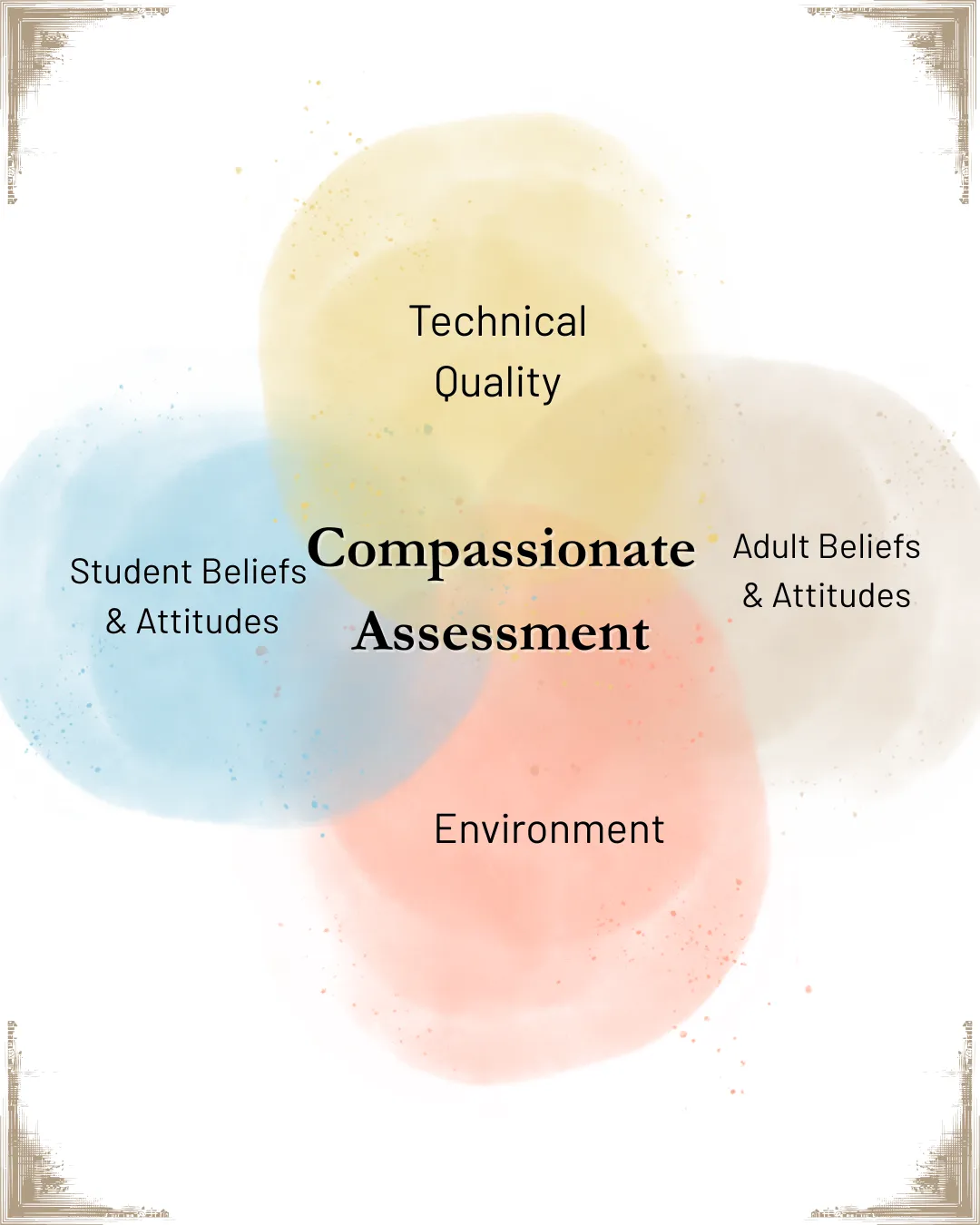
Compassionate Assessment helps school leaders and educators reflect across four interconnected components:
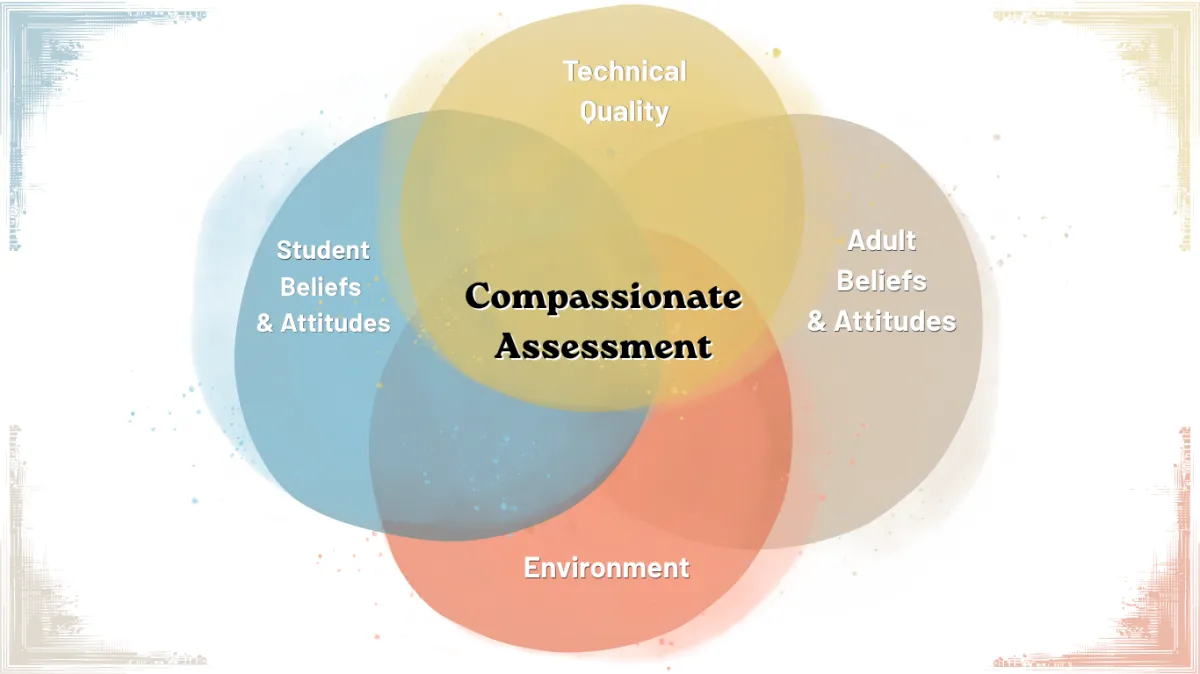
Assessment happens in context. How, when, and where testing occurs can either support focus and equity—or amplify stress and confusion.
Mindsets matter. When educators distrust assessment or feel it’s being used against them, systems break down. CAF helps rebuild confidence and shared purpose.
The most overlooked factor of all: how students feel about assessment. Their sense of agency and safety determines how authentically they show what they know.
Why It Matters
Assessment shapes how we see progress, communicate expectations, and guide learning. When it loses its connection to trust and purpose, it becomes a source of confusion and frustration. Compassionate Assessment seeks to rebuild that connection—aligning measurement with meaning so that every data point leads back to people, not pressure.
Compassionate Assessment in Action
Compassionate Assessment isn’t theory — it’s a practical lens that schools can use to improve systems right now.
Districts and schools using this model have:
Reduced student testing anxiety
Improved staff trust in data conversations
Simplified testing schedules for equity and focus
Created assessment environments that actually support learning
Every reflection, audit, and action plan in CAF leads back to one goal: alignment between what we intend, what we measure, and how people experience it.
What’s Next?
The Book: Coming Soon!
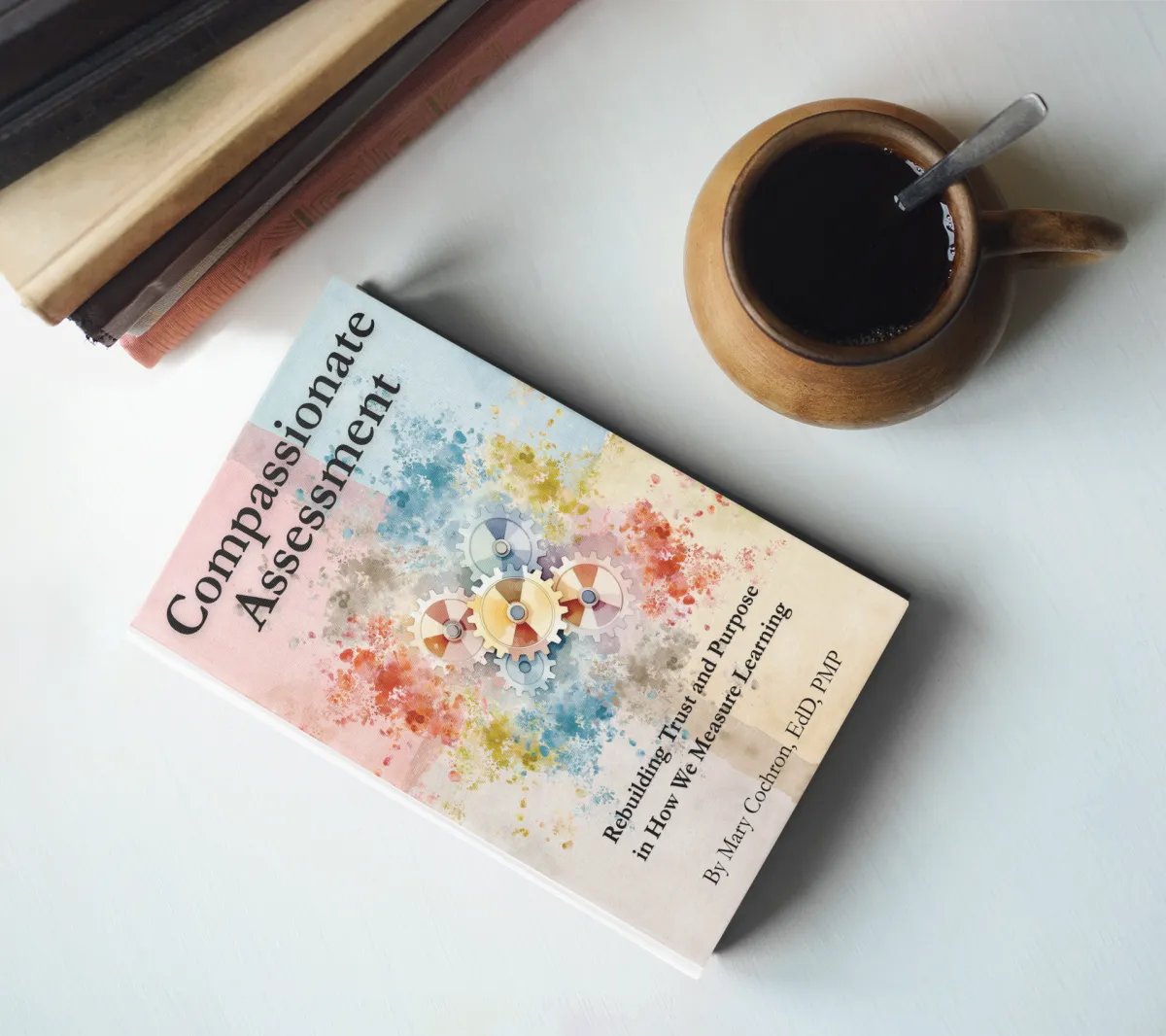
Compassionate Assessment:
Rebuilding Trust and Purpose in How We Measure Learning
The upcoming book, Compassionate Assessment: Rebuilding Trust and Purpose in How We Measure Learning, explores these ideas in depth.
Launching in 2026, it will offer practical ways for educators, administrators, and families to bring compassion, clarity, and collaboration back into the assessment process.
Join the interest list below to stay updated on new resources, events, and tools that extend this work beyond the page.
Tools, Workshops, and Resources (Coming Soon)
The Compassionate Assessment ecosystem is growing. When the book launches in 2026, it will be accompanied by new professional learning and leadership resources, including:
The Compassionate Assessment Reflection Tool for teams and administrators
Assessment Environment Audit Checklists
Metrics & Meaning Workshop Series
Implementation Templates and discussion guides
Until then, join the Metrics & Meaning Newsletter for early insights, case studies, and leadership tools—all delivered in under five minutes each month.